Written by
Dennis Middleton
Owner, Middleton Painting
In this article
- 1.What are the best Germantown exterior paint colors for 2026?
- 2.How do the 2026 colors of the year work on a Germantown exterior?
- 3.Which trim white looks best against red brick?
- 4.What shutter and front door colors suit a traditional brick home?
- 5.How does West Tennessee weather change exterior color choices?
- 6.How do you test Germantown exterior paint colors before committing?
- 7.How can Middleton Painting help with Germantown exterior paint colors?
- 8.What is the next step for your Germantown exterior?
What are the best Germantown exterior paint colors for 2026?
The best Germantown exterior paint colors for 2026 are warm, grounded shades that sit comfortably beside red and brown brick: a soft warm white for trim, a mid tone khaki or tan for painted siding, and a deep espresso, charcoal or blackened green for shutters and doors. Both major paint brands chose warm, earthy colors of the year for 2026, which suits the brick that fronts so many local homes.
An exterior palette is the set of colors assigned to each surface of a house: body, trim, shutters, front door, garage door and porch ceiling. On a brick home the masonry is already the body color, so most of the decisions happen on the smaller surfaces.
This guide names real colors with their manufacturer codes and light reflectance values (LRV), explains which job each one does, and gives you a simple test to run at your own curb before you buy a gallon. If you are planning a full repaint, our exterior painting service page explains how the work itself is scoped.
How do the 2026 colors of the year work on a Germantown exterior?
They work best as accents and supporting colors rather than as a whole house wash. Benjamin Moore’s pick is dark enough for doors and shutters, while Sherwin-Williams’ pick is a mid tone neutral that can carry siding or painted brick.
Benjamin Moore named Silhouette AF-655 its Color of the Year 2026, describing it as a mix of rich espresso with notes of charcoal. Andrea Magno, the brand’s director of color marketing and design, put it this way: “Like a perfectly tailored suit, this hue has the versatility and softness to bring a space from expected to exceptional.” The Silhouette color page lists an LRV of 10.18, which places it firmly in front door and shutter territory.
Sherwin-Williams went lighter. Its 2026 Color of the Year announcement calls Universal Khaki a warm, grounding neutral, and the Universal Khaki SW 6150 color page lists it for interior and exterior use with an LRV of 40. That middle value is useful on a Germantown elevation where painted siding or a rear addition needs to sit quietly beside brown or tan brick.
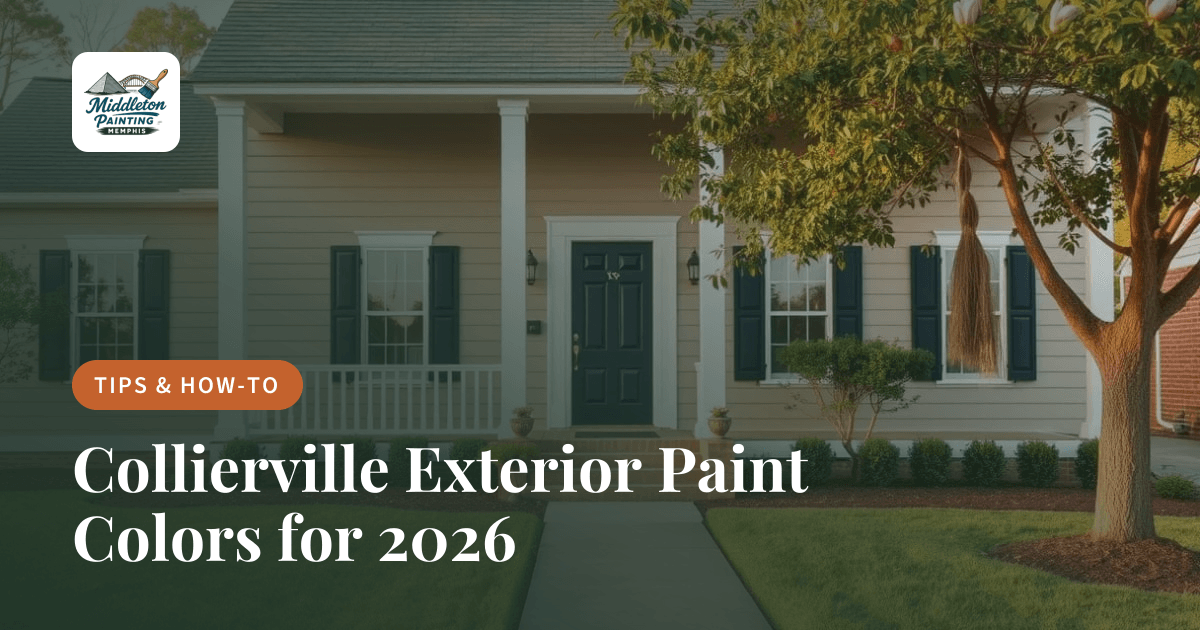
A simple way to combine them on a brick and siding home: Universal Khaki on painted siding or a rear addition, a warm white on trim, and Silhouette on the front door. The khaki bridges the brick and the white, and the espresso door anchors the entry. On a house that is all brick, skip the khaki and let the masonry play that middle role instead. Either way, these Germantown exterior paint colors should be sampled beside the real brick, because a mid tone can look gray beside orange brick and golden beside brown brick.
Neither color is a rule. Treat them as proof that warm, earthy tones are where both brands see the market heading, then let your own brick and roof make the final call.
Which trim white looks best against red brick?
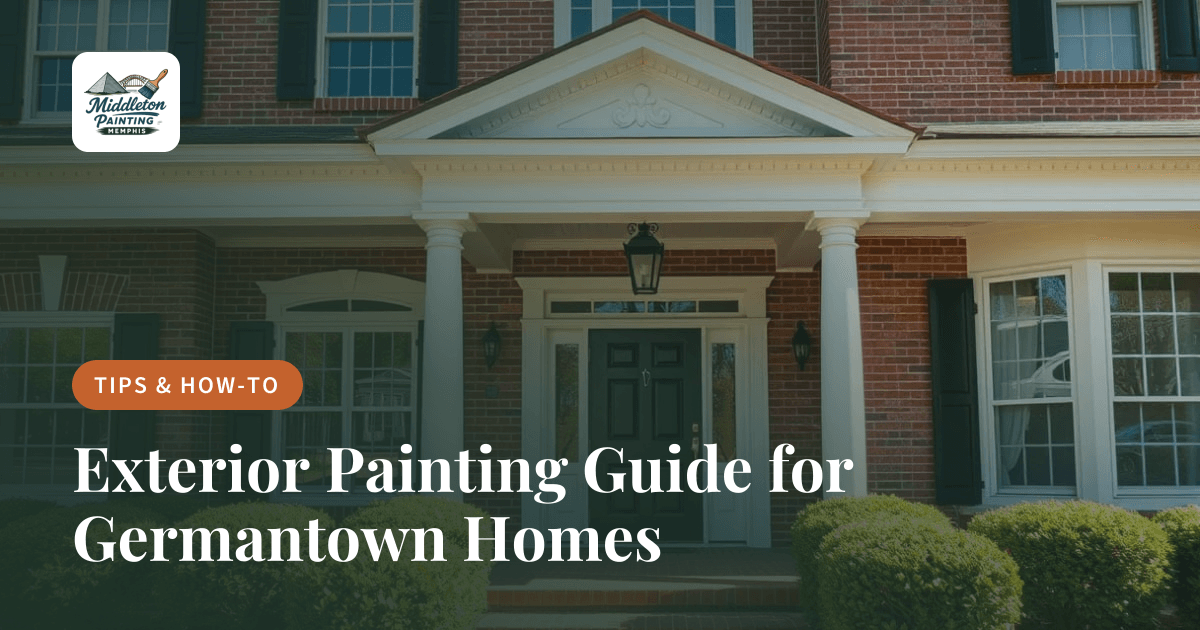
A warm, slightly softened white usually looks best against red or orange brick, because a stark blue white can make the masonry look dirty by comparison. Look for a white with a hint of cream rather than the brightest white on the rack.
Sherwin-Williams Alabaster SW 7008 is a good benchmark. The manufacturer describes it as a soft, warm but balanced white, and its color page lists an LRV of 82. That is bright enough to frame windows and rooflines from the street, yet it does not glare in full afternoon sun the way the very whitest whites can.
On cooler brick, gray stone or homes with a black or slate roof, a cleaner white may look better. Hold two whites side by side against the mortar joints: mortar is often the deciding factor, and a trim white that clashes with it will look wrong from every angle.
Also decide early whether gutters, soffits and fascia share the trim color. Keeping them together usually makes a traditional Germantown roofline look tidier, especially on homes with deep eaves.
Settle Your 2026 Exterior Palette
Get a free written estimate that lists every surface, color code and sheen for your Germantown home.
Request a Free EstimateWhat shutter and front door colors suit a traditional brick home?
Deep, low saturation colors suit traditional brick best: charcoal, bronze brown, blackened green and espresso. They add depth without competing with the masonry, and they hide the dust and pollen that collect on louvered shutters.
Four verified options to sample:
- Iron Ore SW 7069: a deep charcoal that Sherwin-Williams recommends for exteriors, strong with black lanterns and window frames.
- Urbane Bronze SW 7048: a brownish gray that sits naturally beside brown and tan brick.
- Narragansett Green HC-157: a blackened teal from Benjamin Moore’s Historical Colors, also part of its Color Trends 2026 palette.
- Silhouette AF-655: the espresso color of the year, with an LRV of 10.18 on its color page, ideal for a front door that should feel rich rather than loud.
A useful habit is to keep shutters and door in the same family but not the same color. For example, Iron Ore shutters with a Silhouette door read as deliberate, while two unrelated accents can make a long brick front look busy. Homes in established areas such as Forest Hill Irene and Dogwood Grove often have mature trees that deepen these colors further, so test them in shade as well as sun.
How does West Tennessee weather change exterior color choices?
Heat, strong sun and frequent rain mean dark colors will look darker in shade and show fading sooner on sunny walls. Choose dark shades for smaller areas you can recoat easily, and keep large sunny walls in light or mid tones.
The National Weather Service normal climate table for Memphis lists a normal July high of 91.9°F and 54.94 inches of precipitation a year. That combination of summer heat and plenty of moisture is hard on any coating, and it is one reason quality exterior products and good preparation matter more here than in a milder climate.
Color affects how hard the paint has to work. A very low LRV absorbs more sunlight, so a west facing door in Silhouette will run warmer than the same door in Alabaster. That does not rule dark colors out; it simply means using them where you can maintain them, and choosing a premium exterior line from Sherwin-Williams or Benjamin Moore. Our comparison of Sherwin-Williams and Benjamin Moore in Tennessee humidity covers the product side, and our guide to the best time of year for exterior painting in Tennessee covers timing.
How do you test Germantown exterior paint colors before committing?
Test with large painted boards at the house, viewed from the street, at more than one time of day. Small chips and phone screens cannot show how a color behaves beside textured brick or under a deep roof overhang.
Use this three step check, which we call the Curb, Corner, Close test:
- Curb: stand at the end of the drive. Does the trim frame the house, and do shutters and door read as one family? If you cannot tell two samples apart from the street, pick the cheaper or easier one.
- Corner: hold boards on the sunniest corner and the shadiest one. Warm whites can turn yellow in low light and cool whites can turn blue.
- Close: stand at the front door. This is where the door color and hardware are judged, so the door can be the richest color on the house.
Contrast is easy to measure with the LRV figures on manufacturer pages. Alabaster at 82 against Silhouette at 10.18 is a strong, crisp contrast; Universal Khaki at 40 against Alabaster is softer and more traditional. If your neighborhood has an HOA or architectural review committee, ask for its approved palette or submission process before you order samples, because rules vary from street to street.
How can Middleton Painting help with Germantown exterior paint colors?
We help turn a shortlist of samples into a written exterior plan. Middleton Painting has served Memphis and Shelby County since 2009, is licensed and insured in Tennessee, and uses Sherwin-Williams and Benjamin Moore paints, so the colors in this guide are the same products we apply.
During a free written estimate we look at the brick, trim, siding and any repairs, then list every surface with its color, code and sheen so nothing is left to guesswork on the job. We reply within one business day, and every project carries our 5-year workmanship warranty. You can read more about the work on our Germantown exterior painting page, see the wider Germantown service area, or check typical market ranges in our guide to the cost to paint a house exterior in Germantown.
What is the next step for your Germantown exterior?
Start with what will not change: brick, mortar and roof. Pick a warm trim white, one shutter color and one door color from the same family, then run the Curb, Corner, Close test before anything is ordered. For a wider walk through the whole project, read our exterior painting guide for Germantown homes.
When you are ready, request a free estimate or call (901) 352-0202 and we will help you confirm your Germantown exterior paint colors on site.
Key Takeaways
- Both 2026 colors of the year are warm and earthy, which suits Germantown brick.
- Use a softened warm white such as Alabaster SW 7008 (LRV 82) for trim on red brick.
- Keep shutters and doors in one deep family, such as Iron Ore with Silhouette AF-655.
- Memphis summers average a 91.9°F July high, so put the darkest colors on small, easy to maintain areas.
- Run the Curb, Corner, Close test with large boards and check HOA rules before ordering paint.
Related Services
Germantown Exterior Painting
Brick, siding and trim painting for Germantown homes.
Exterior Painting Services
How we prepare and paint home exteriors across Shelby County.
Germantown Interior Painting
Carry your palette inside with interior painting.
Germantown Cabinet Painting
Kitchen and bathroom cabinet refinishing in Germantown.
Frequently Asked Questions
Sources
Written by
Dennis Middleton
Owner, Middleton Painting
Middleton Painting, Memphis, TN(901) 352-0202 · info@middletonpaintingmemphis.com
Mon to Fri: 7:00 AM to 6:00 PM · Saturday: 8:00 AM to 2:00 PM