Written by
Dennis Middleton
Owner, Middleton Painting

In this article
- 1.What does an exterior painting guide for Germantown homeowners need to answer?
- 2.Which parts of a Germantown house wear out first?
- 3.Is your Germantown home old enough to need lead safe painting?
- 4.How do humidity and shade affect exterior paint in Germantown?
- 5.What weather window works for exterior painting in Germantown?
- 6.What should a Germantown exterior painting estimate spell out?
- 7.How can Middleton Painting help with a Germantown exterior repaint?
- 8.Where should you start with your Germantown exterior?
What does an exterior painting guide for Germantown homeowners need to answer?
An exterior painting guide for Germantown homeowners should answer three questions in order: what condition the surfaces are in, when the weather will let paint dry and bond, and what the written scope includes. Exterior painting is the cleaning, repair, priming and coating of a home’s outside surfaces to protect them from sun and moisture. Settle those questions first and the color choice becomes the easy part.
Local weather shapes every one of those answers. NOAA’s 1991 to 2020 normals for Memphis International Airport, the closest long term station, show April as the wettest month at 5.87 inches and September as the driest at 3.03 inches, with July highs near 92°F. A plan that ignores those patterns is a plan that will be rescheduled.
To keep decisions simple, this guide uses one rule we call the Dry, Sound, Sealed test. Before any coat goes on, every surface should pass all three:
- Dry: no surface moisture, no dew, and a surface temperature safely above the dew point.
- Sound: no loose or peeling paint, chalk, rot or failed glazing left under the new coat.
- Sealed: primed bare spots and fresh caulk at joints, so water cannot get behind the film.
Which parts of a Germantown house wear out first?
Sun and rain exposed areas fail first: south and west walls, window sills, the tops of porch rails and the lower edge of fascia. Shaded walls tend to fail differently, with mildew and soft wood rather than fading.
Research backs up what homeowners see. A Purdue Extension bulletin written with the USDA Forest Products Laboratory notes that “Areas fully exposed to sunshine and rain are the first to deteriorate and therefore should receive two coats.” The same bulletin warns that a paint film can blister or peel if the wood is wetted or if inside water vapor moves through the house wall, which is why peeling near bathrooms, gutters and sprinkler heads deserves a closer look.
Homes along Poplar Pike, Kimbrough Road and Forest Hill Irene Road often combine brick, painted wood trim, fiber cement siding, porch ceilings, shutters and doors on one elevation. Walk each side, mark peeling areas with painter’s tape, and take photos after a rain if a stain seems tied to moisture. That record is the Sound part of the Dry, Sound, Sealed test.
If your home is in Forest Hill Irene or Dogwood Grove, the local Germantown exterior painting service page explains what a residential scope typically covers for siding, trim and brick.
Is your Germantown home old enough to need lead safe painting?
If it was built before 1978, yes. Paid work that disturbs old paint on those homes falls under the EPA’s lead Renovation, Repair and Painting rule, and exterior scraping almost always disturbs paint.
The EPA states that “anyone who is paid to perform work that disturbs paint in housing and child-occupied facilities built before 1978 must be certified.” Germantown includes neighbourhoods from several building eras, so the year on your county property record is the first thing to check, not the style of the house.
The rule does exempt small jobs. Minor repair and maintenance that disturbs 20 square feet or less on the exterior of a home is not covered. A full repaint with scraping on several elevations goes far past that line, so ask each bidder how they will contain chips, protect beds and soil, and clean up daily.
This also affects the estimate. Lead safe containment adds setup and cleanup time, so two bids for the same older house can differ simply because one follows the rule and one does not. Ask the question directly before you compare prices.
Get a Clear Exterior Painting Scope for Your Germantown Home
Walk the property with us and get a free written plan for preparation, coatings, color placement and scheduling.
Request a Free EstimateHow do humidity and shade affect exterior paint in Germantown?
Humidity slows drying and shade keeps surfaces damp longer, so mildew and slow cure are the main risks on the cooler sides of a Germantown home. The fix is moisture control and timing, not just a stronger paint.
Summer nights stay warm and humid here. NOAA’s normals for Memphis show a July average low of 73.6°F, so walls under mature trees may never fully dry out overnight. The EPA’s mold guidance sums up the principle in one line: “The key to mold control is moisture control.” On an exterior, that means trimming branches back from siding, clearing gutters and fixing sprinklers that soak the same wall every morning.
Shaded walls also change the daily work order. Benjamin Moore says the surface should be “more than 5 ºF above the dew point” before painting, and notes that “If the humidity is too high, paint can dry improperly.” A crew may start on sunny elevations and save shaded ones for midday, then stop early enough that dew does not land on wet paint.
Washing matters as well. Mildew on siding should be cleaned off and the surface allowed to dry fully before primer, or the new coat can trap growth underneath. That is the Dry part of the test in action.
What weather window works for exterior painting in Germantown?
A good window is a run of dry days with surfaces inside the label’s temperature range and enough daylight for each coat to dry before evening. Fall is often the most reliable season, with spring close behind once the April rains ease.
NOAA’s Memphis normals put October highs near 75°F and lows near 54°F, which sits comfortably inside most exterior product ranges. Benjamin Moore calls 77ºF the optimal painting temperature, while noting that paint can still be applied across a wide range.
Cooler days are workable with the right product. Sherwin-Williams says that “Duration, Resilience, SuperPaint and A-100 Exterior” allow painting down to 35°F, but it also advises keeping conditions above the dew point for at least 48 hours after application. After a storm, it recommends waiting a MINIMUM of one day after a heavy rain and confirming the surface is dry.
For a season by season breakdown, see the best time of year for exterior painting in Tennessee. Ask your contractor how they will handle a wet morning during a multiday job; a clear answer is a good sign.
Build some slack into the calendar as well. A job planned for a few days can stretch across a week when a front moves through, and that is normal. This exterior painting guide for Germantown homeowners treats weather days as part of the plan, so nobody feels pressure to coat a damp wall just to stay on schedule.
What should a Germantown exterior painting estimate spell out?
A useful estimate lists the elevations and structures included, repairs, washing method, caulk and primer work, products, coat count, color placement, protection, cleanup, exclusions and a final walkthrough. A single total at the bottom of a page is not enough to compare bids.
Coat count deserves special attention. The Purdue bulletin found that one coat of good house paint over primer should last 4 to 5 years, but two coats can last up to 10 years on wood suited to painting. It also advises that the first top coat should be applied within 2 weeks after the primer and the second coat within 2 weeks of the first, so the schedule should not leave primer exposed for weeks.
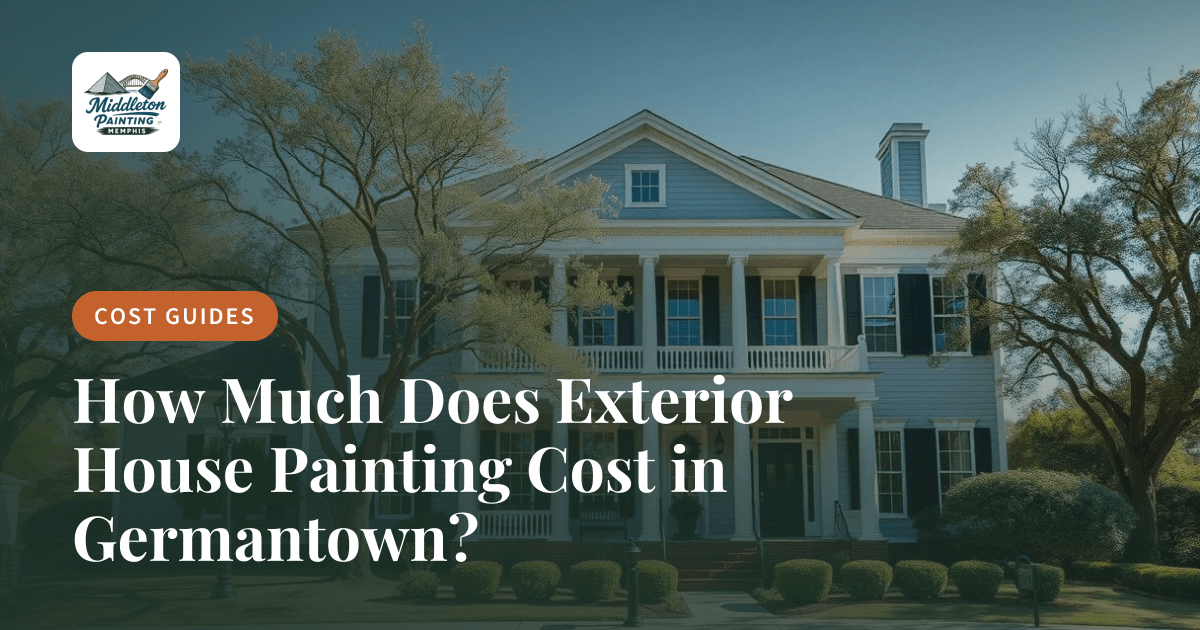
If your neighbourhood has an architectural review, submit colors before you book a start date, and keep the approved names and numbers with the contract. For budgeting, read how much exterior house painting costs in Germantown, and for preparation details see the exterior painting service overview. Every line in this exterior painting guide for Germantown homes should show up somewhere in that written scope.
How can Middleton Painting help with a Germantown exterior repaint?
Middleton Painting has painted homes across Memphis and Shelby County since 2009, including throughout Germantown. We are licensed and insured in Tennessee with general liability and workers’ compensation, and every project is backed by a 5-year workmanship warranty.
We walk the house with you, apply the Dry, Sound, Sealed test to each elevation, and put the result in a free written estimate. We use Sherwin-Williams and Benjamin Moore coatings and reply to requests within one business day. Homeowners have given us 5.0 stars across more than 150 Google reviews.
Where should you start with your Germantown exterior?
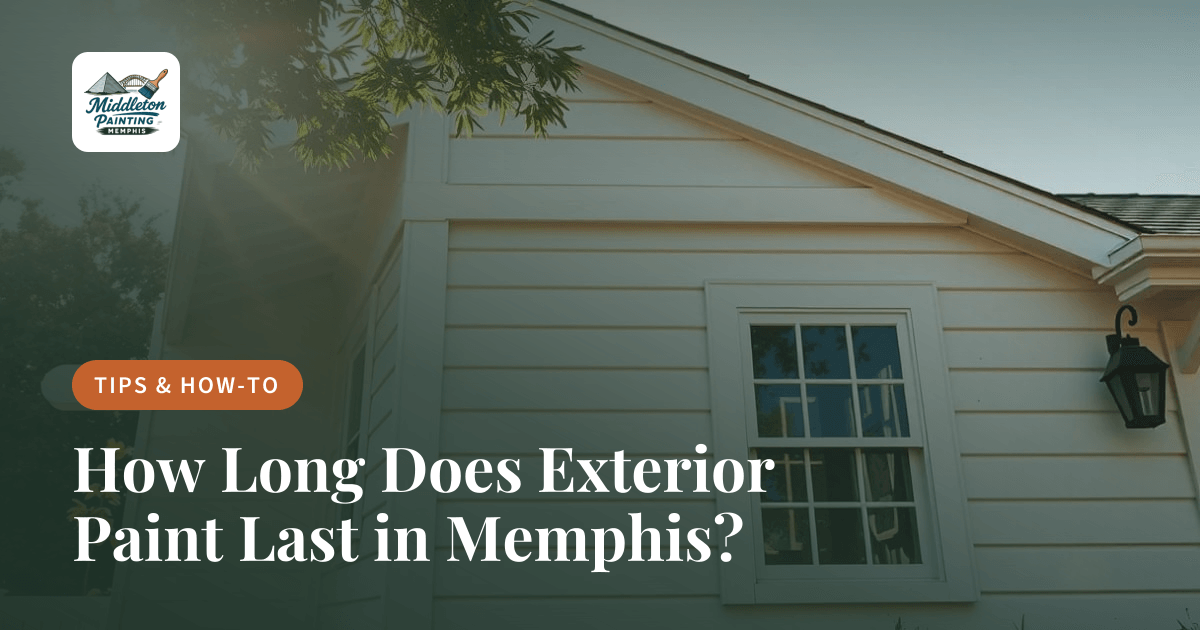
Start with a slow walk around the house and this exterior painting guide for Germantown homeowners in hand. Note what fails first, check the year your home was built, and pick colors early; our Germantown exterior paint colors for 2026 post can help. To plan the next repaint, our guide to how long exterior paint lasts in Memphis explains what shortens a finish’s life.
Keep a record of products and colors once the job is done. Purdue notes that sheltered areas such as eaves can often be repainted every other time the house is painted, which keeps future costs down. When you are ready, request a free written estimate or call (901) 352-0202.
Key Takeaways
- Sun and rain exposed walls and trim fail first, so they need two finish coats.
- Every surface should be dry, sound and sealed before a coat goes on.
- Homes built before 1978 need EPA certified, lead safe prep when paint is disturbed.
- Shade and humidity call for moisture control and a smart daily work order.
- A good estimate names every step, product, coat count and exclusion.
Related Services
Germantown Exterior Painting
Brick, siding and trim painting for Germantown homes.
Exterior Painting Services
Preparation, priming and coating for every exterior surface.
Germantown Interior Painting
Walls, ceilings and trim inside your Germantown home.
Germantown Cabinet Painting
Kitchen and bathroom cabinet refinishing.
Frequently Asked Questions
Sources
- NOAA NCEI: U.S. Climate Normals 1991 to 2020, Memphis International Airport, monthly
- Purdue Extension and USDA Forest Products Laboratory: Selection and Application of Exterior Finishes for Wood (NCR 135)
- EPA: Renovation, Repair and Painting Program for Contractors
- EPA: A Brief Guide to Mold, Moisture and Your Home
- Benjamin Moore: Temperature Guide for Exterior Painting
- Sherwin-Williams: Exterior Product Application Frequently Asked Questions
Written by
Dennis Middleton
Owner, Middleton Painting
Middleton Painting, Memphis, TN(901) 352-0202 · info@middletonpaintingmemphis.com
Mon to Fri: 7:00 AM to 6:00 PM · Saturday: 8:00 AM to 2:00 PM